

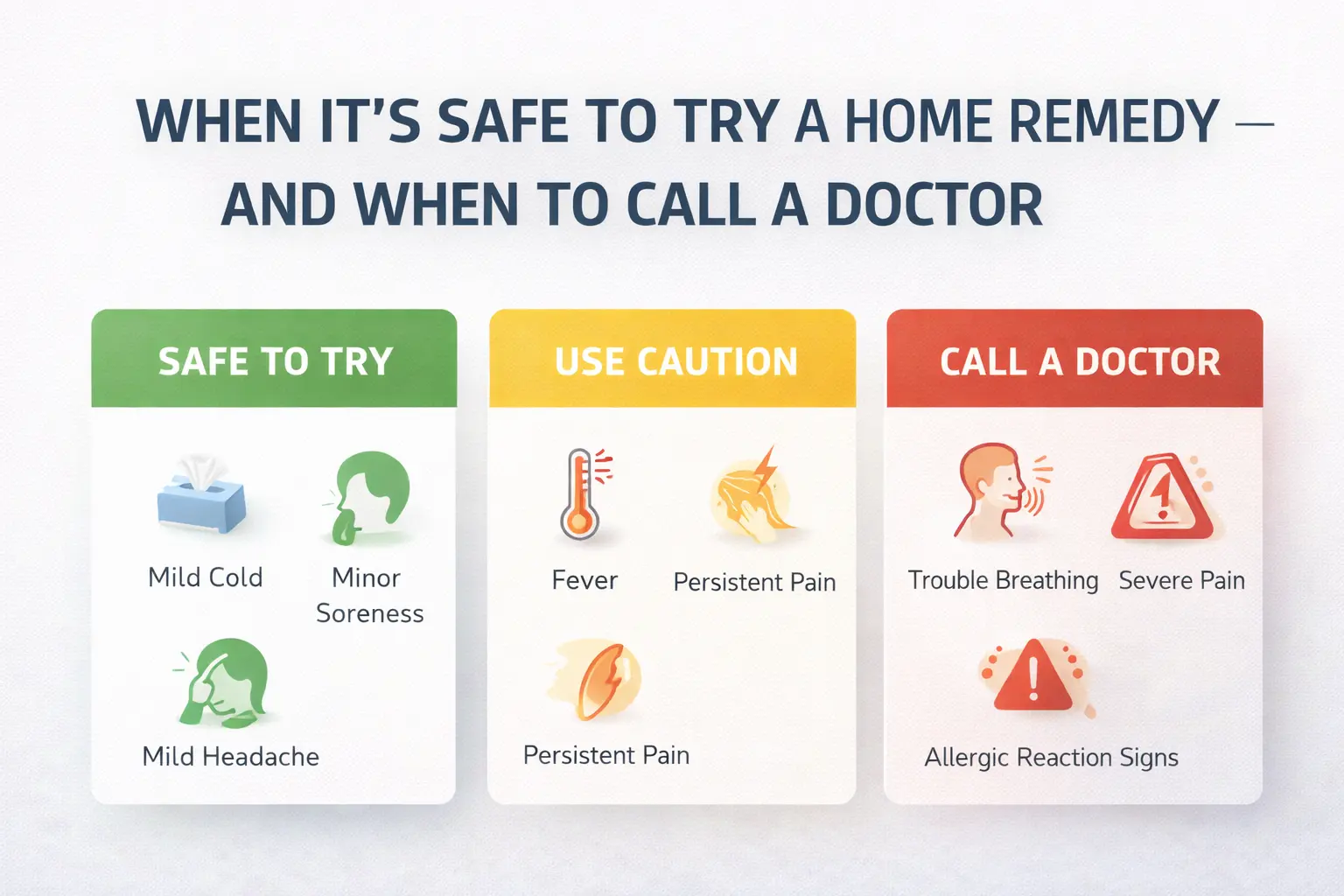
If you’re like most adults in the U.S., you probably try a home remedy first when something feels off:
- A heating pad for back pain
- Ginger or peppermint tea for an upset stomach
- A cool cloth for a headache or low-grade fever
That’s completely normal. For mild, everyday aches and discomforts, simple home care can be a practical first step.
But there’s a big, important question hiding underneath:
How do you know when it’s still safe to stay home — and when it’s time to call a doctor or go to urgent care or the ER?
This guide is designed to help you:
- Understand when home remedies make sense
- Recognize red-flag symptoms where home care is not enough
- Learn how to think through “watch and wait” vs “get help now”
- Use a simple decision checklist for common situations
Important: This article is for general information only and is not medical advice. It can’t diagnose you or tell you exactly what to do in an emergency. If you’re ever in doubt, it’s safer to call your doctor, urgent care, or 911 (in the U.S.) and ask a professional.
Why We Like Home Remedies (And Why That’s Not Always Enough)
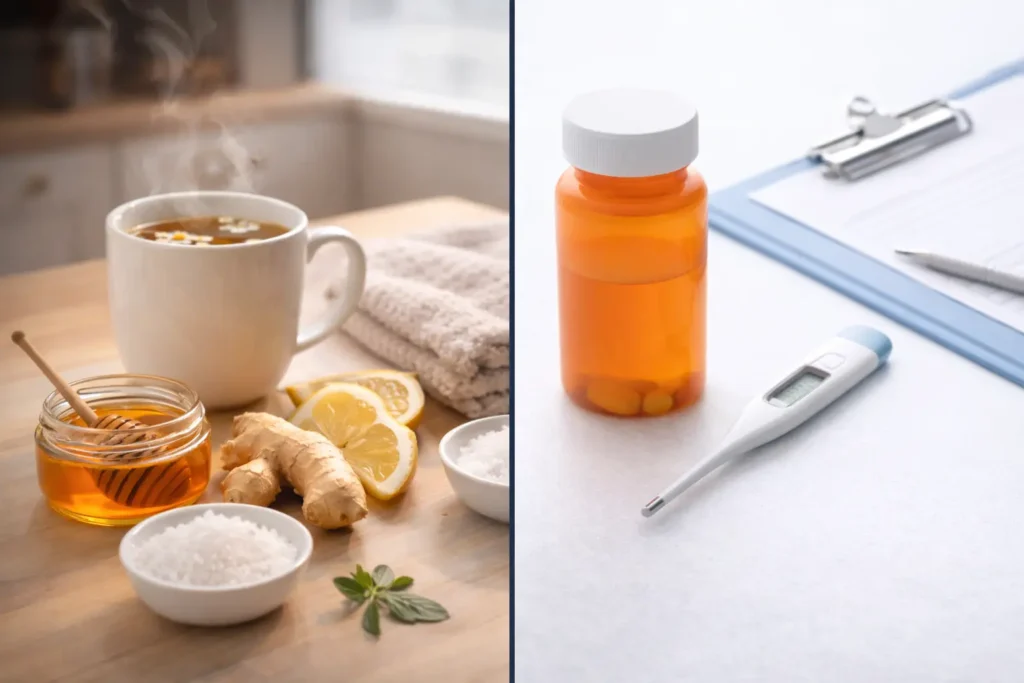
Home remedies are popular for a reason:
- They’re usually easy and inexpensive.
- They feel gentle and familiar (tea, rest, heat, ice).
- They let you feel more in control of your health.
- For many mild issues, your body will get better on its own with time and simple care.
For things like:
- Slight muscle soreness after a workout
- Mild tension headaches
- Occasional heartburn or gas
- A small, non-deep cut or bruise
- Normal period cramps
…it can be very reasonable to start with home care as long as you’re also watching for signs that something more serious might be going on.
The key is to understand where home remedies fit:
- They are best for mild, short-term, familiar symptoms that are slowly improving.
- They are not enough for severe, new, or rapidly worsening symptoms — especially if they involve your chest, breathing, brain, or major injuries.
Step 1: Get Clear on What “Mild” Really Means
When you’re deciding whether to try a home remedy or call a doctor, you first need to ask:
How bad is this, really?
“Pain” or “discomfort” means different things to different people. To make it easier, you can think about a few basic questions.
Check 1: How Much Is This Interfering With Your Life?
Symptoms are more likely to be “mild” when:
- You can still do your daily activities, even if you’re uncomfortable
- You can walk, talk, eat, and drink fairly normally
- You’re not doubled over, unable to move, or crying from pain
- You feel like, “This is annoying, but I can manage for now”
On the other hand, symptoms lean toward “serious” when:
- You can’t stand or walk without severe pain or help
- You can’t keep down fluids (vomiting over and over)
- You’re having trouble speaking clearly, thinking, or staying awake
- You feel like, “Something is really wrong. This doesn’t feel normal.”
Check 2: Did It Come On Slowly or Suddenly?
In many cases:
- Slow, gradual symptoms (like an ache that builds over a few days) are more likely to be mild — though not always.
- Sudden, severe symptoms (like chest pain out of nowhere, a “worst-ever” headache, or sudden weakness on one side of the body) are more likely to be serious.
If a symptom hits you like a bolt of lightning, or out of the blue and very strong, that’s a big red flag to seek urgent care.
Check 3: Is This Familiar or Completely New?
You know your body better than anyone else.
- If you’ve had similar mild headaches, muscle soreness, or cramps before — and your doctor has already ruled out serious causes — home remedies may be a reasonable first step.
- If the symptom is totally new, very different from your usual pattern, or much worse than what you typically feel, that’s a signal to take it more seriously.
When It’s Usually Reasonable to Try a Home Remedy First
Let’s look at some everyday situations where home care is often reasonable — as long as you keep an eye on how things progress.
Note: These examples assume you don’t have special risk factors or serious chronic conditions. If you do, you should follow your doctor’s specific advice.
1. Mild Muscle Soreness After Activity
Example: You raked leaves all weekend, started a new workout, or did a deep house clean. The next day:
- Your muscles feel sore and stiff, but
- You can still walk, move, and do daily tasks, just a bit more slowly.
Reasonable home remedies:
- Gentle movement and light stretching
- Warm baths or showers
- Heat packs or a warm compress
- Staying hydrated and resting a bit more
- Short breaks from heavy lifting or intense exercise
Watch out for:
- Sudden sharp pain, swelling, inability to bear weight
- Pain that keeps getting worse instead of slowly better
2. Mild Tension Headache
Example: You’ve had a stressful day at work, lots of screen time, or poor posture. You feel:
- A dull, band-like ache around your forehead or back of your head
- Tight shoulders or neck
- No vision loss, slurred speech, or one-sided weakness
Reasonable home remedies:
- Drinking water in case you’re a bit dehydrated
- Short breaks from screens
- A cool cloth or warm compress on your head or neck
- Gentle neck and shoulder stretches
- Quiet rest in a darker room
Call a doctor or urgent care if:
- The headache is sudden and severe (“worst of my life”)
- It comes with fever, stiff neck, confusion, or rash
- You have weakness, numbness, vision changes, trouble speaking, or difficulty walking
- You’ve had a head injury or fall
3. Mild Upset Stomach or Digestive Discomfort
Example: You ate something heavier than usual or a new food. You feel:
- Mild bloating, gas, or cramping
- Maybe a bit of nausea, but you can still drink fluids
- No severe pain, no blood in stool, no repeated vomiting
Reasonable home remedies:
- Sipping clear fluids or herbal teas like ginger or peppermint (if they’re safe for you)
- Eating lighter meals: toast, rice, bananas, or other bland foods
- Avoiding heavy, fried, or very spicy foods for a short time
- Taking short walks to support digestion
Stop home remedies and get medical help if:
- Pain becomes sharp or severe
- You have persistent vomiting and can’t keep down fluids
- You notice blood in your stool or black, tarry stool
- You develop a high fever or strong, localized pain (for example, in the lower right abdomen)
4. Small Cuts, Scrapes, and Bruises
Example: You bump your shin on the coffee table or get a small kitchen cut, but:
- Bleeding slows with gentle pressure
- The wound is shallow, small, and cleanable at home
- You’re otherwise feeling well
Reasonable home care:
- Gently washing the area with clean water and mild soap
- Applying a clean bandage
- Cool packs for bruises (wrapped in a cloth, not directly on skin)
- Watching for signs of infection (redness, warmth, pus, spreading streaks, or fever)
Get medical help if:
- Bleeding doesn’t stop after 10–15 minutes of steady, firm pressure
- The cut is deep, gaping, or you can see fat, bone, or muscle
- You were cut by dirty or rusty objects
- You haven’t had a tetanus booster in many years (check with your doctor)
5. Mild Cold Symptoms
Example: You have:
- A runny nose, mild cough, or scratchy throat
- Mild body aches and low-grade fever
- You can still eat, drink, and breathe normally
Reasonable home remedies:
- Rest and extra fluids
- Warm teas, broths, and saltwater gargles
- Humidifier or steamy showers
- Honey for cough (for adults and older kids, but not for children under 1 year old)
Seek urgent care or emergency help if:
- You have trouble breathing, chest pain, or lips/face turning blue
- You’re confused, unusually drowsy, or hard to wake
- Fever is very high or doesn’t improve with time and usual care
- Symptoms worsen rapidly instead of slowly improving over a few days
Clear Red-Flag Signs: When NOT to Rely on Home Remedies
There are certain symptoms where the answer is simple:
Do not rely on home remedies. Get medical help right away.
Call 911 or Emergency Services Immediately If You Have:
- Chest pain or pressure, especially if it:
- Feels heavy, squeezing, or crushing
- Spreads to your arm, back, neck, or jaw
- Comes with shortness of breath, sweating, or nausea
- Signs of stroke, such as:
- Sudden weakness or numbness on one side of your body
- Sudden trouble speaking or understanding speech
- Sudden confusion, loss of balance, or trouble walking
- Sudden trouble seeing in one or both eyes
- Severe trouble breathing:
- Gasping for air
- Can’t speak full sentences
- Feeling like you’re suffocating
- Sudden, severe headache unlike anything you’ve had before, especially with:
- Neck stiffness
- Confusion
- Vision changes
- Weakness or numbness
- Heavy bleeding that doesn’t stop with steady pressure
- Severe injury:
- Possible broken bone
- Obvious deformity
- Head injury with loss of consciousness, confusion, or vomiting
In these situations, skip home remedies. Don’t drive yourself. Call 911 (in the U.S.) or your local emergency number.
Call a Doctor or Urgent Care Soon (Same Day or Within 24 Hours) If You Have:
These symptoms are not usually an ambulance emergency, but they do deserve prompt professional help:
- Fever that lasts more than a couple of days, especially with:
- Chills, night sweats, or worsening symptoms
- New or worsening shortness of breath with mild activity
- Ongoing stomach pain that’s moderate to severe
- Painful urination, blood in urine, or back pain with fever
- Persistent vomiting or diarrhea, especially if you can’t keep down fluids
- New or changing chest discomfort with activity
- Joint swelling, warmth, or redness that isn’t getting better
- A wound that:
- Becomes more red or swollen
- Oozes pus
- Causes fever or chills
Home remedies may still be part of your care (like rest, fluids, gentle heat), but you need professional guidance to rule out serious causes.
A Simple “Home Remedy vs. Doctor” Checklist
When you’re not sure what to do, walk through this short mental checklist.
✅ It’s Usually Okay to Start With a Home Remedy If:
- The symptom is mild (annoying but manageable).
- It came on gradually.
- You’ve had something similar before and your doctor wasn’t concerned.
- You don’t have serious risk factors that make this symptom more dangerous for you (for example, heart disease, diabetes, or pregnancy).
- You can eat, drink, and move reasonably well, even if you’re uncomfortable.
- You see small signs of improvement with rest and basic care.
🚫 Don’t Rely on Home Remedies If:
- The symptom is sudden, severe, or feels “different” than usual.
- You have trouble breathing, chest pain, confusion, or sudden weakness.
- You’re worried enough that you keep thinking, “This doesn’t feel right.”
- Symptoms keep getting worse, not better.
- You can’t keep down fluids or you feel faint.
- You have a serious medical condition and your symptom could be related.
When in doubt, it’s almost always better to call a doctor or nurse line and ask. It’s okay if turns out to be nothing serious — that’s a good outcome.
How to Talk With a Doctor About Home Remedies
Many people feel nervous admitting that they’ve tried home remedies, herbs, teas, or over-the-counter products. But your healthcare provider needs the full picture to help you safely.
When you call or visit, it’s helpful to share:
- What symptom you’re having and what it feels like
- When it started and whether it’s getting better, worse, or staying the same
- What you’ve tried at home so far:
- Heat, ice, rest, baths, teas, oils, etc.
- Over-the-counter meds (including pain relievers, allergy meds, or supplements)
- Any medical conditions you already have
- Any medications or supplements you take regularly
You might say something like:
- “I’ve had this mild lower back pain for three days. I’ve tried heat and gentle stretching, but it’s not really getting better. Is it okay to keep treating it at home, or should I come in?”
- “I’ve had a sore throat and low fever for two days. I’ve been drinking tea and resting. I can still swallow and breathe fine, but I’m not sure if I should be seen.”
A good provider will appreciate your honesty and help you figure out what’s safe and what should change.
Safe Ways to Build a “Home Remedy Toolkit”
If you like using gentle, non-branded home remedies, you can create a small, safe toolkit for everyday aches, while remembering its limits.
Ideas for Your Toolkit
- Thermometer – to track fevers
- Water bottle – to encourage regular hydration
- Reusable heat and cold packs – for muscles and joints
- Herbal teas you tolerate well (ginger, chamomile, peppermint, etc.)
- Epsom salts for occasional warm baths
- Simple saline nasal spray for mild nasal dryness or congestion
- A few basic bandages and antiseptic wipes for small cuts
Along with:
- A list of your medications and conditions
- Contact info for your primary care doctor, local urgent care, and emergency services
- A personal rule like: “If I’m worried or if things aren’t improving, I will call a healthcare professional, not just try more home remedies.”
Special Situations: Extra Caution Needed
Some groups of people need to be extra careful about relying on home remedies alone.
1. Pregnant or Breastfeeding People
- Some herbs, teas, and supplements are not safe in pregnancy.
- Certain home remedies (like very hot baths or essential oils) may not be recommended.
- Always check with your obstetric provider or midwife before trying new remedies.
2. People With Chronic Conditions
If you have:
- Heart disease
- High blood pressure
- Diabetes or kidney disease
- Liver problems
- Blood clotting issues
…then certain “natural” remedies could interact with your medications or make your condition worse. Always ask your doctor what’s safe for you.
3. Older Adults
Older adults may:
- Be more sensitive to dehydration and medication side effects
- Have a higher risk of falls and injuries
- Show different signs of infection or heart problems than younger people
For older adults, it’s often better to err on the side of caution and call a doctor earlier instead of waiting too long with home treatments.
Putting It All Together
Home remedies can be:
- Comforting
- Practical
- A helpful part of caring for mild, everyday symptoms
But they are not a substitute for medical care when something serious is going on.
You’ll be safest if you:
- Use home remedies for mild, familiar, slowly improving issues
- Learn and respect red-flag symptoms
- Call a doctor, urgent care, or 911 when your gut feeling says, “This is not normal”
- Remember that it’s always okay to ask a professional, “Can I keep treating this at home, or should I come in?”
This article is for general information only and is not medical advice. Talk with your healthcare provider or another qualified professional about your specific symptoms, especially if they’re new, severe, or not improving.
FAQs: Home Remedies vs. Medical Care
1. How long should I try a home remedy before seeing a doctor?
For many mild symptoms (like minor muscle soreness, a simple tension headache, or a mild cold), people often try home remedies for a couple of days.
You should call a doctor sooner if:
- Symptoms are not improving at all
- They’re getting worse
- You start seeing any red-flag signs (trouble breathing, chest pain, confusion, high fever, severe pain, etc.)
2. Are home remedies safe to use with prescription medications?
Sometimes, yes — but not always. Natural doesn’t automatically mean safe with everything. Some herbs, supplements, and even teas can:
- Affect blood pressure or heart rate
- Change how your body breaks down medications
- Thin your blood or affect bleeding risk
If you take prescription medications, especially for heart disease, blood pressure, diabetes, or mood disorders, ask your doctor or pharmacist before adding any new remedy, supplement, or herb.
3. Is it okay to treat children with home remedies?
It depends on:
- The child’s age
- The symptoms
- The remedy
Some basics:
- Honey should never be given to children under 1 year old.
- Some herbs and essential oils can be too strong for children.
- Kids can get sicker faster than adults.
If your child has a fever, persistent pain, trouble breathing, unusual sleepiness, or symptoms that worry you, call their pediatrician. Don’t rely on home remedies alone.
4. If I go to the ER and it turns out to be nothing serious, did I “overreact”?
No. It’s always better to be safe than sorry when it comes to chest pain, shortness of breath, stroke-like symptoms, severe bleeding, or sudden, intense pain.
Emergency doctors and nurses would much rather send you home with reassurance than have you stay at home during a true emergency. Listening to your body and seeking help when you’re truly concerned is not overreacting.
5. What’s one simple rule I can remember about home remedies?
A helpful rule of thumb is:
“Mild, familiar, slowly improving = home remedies may be okay.
New, severe, or worsening symptoms = call a professional.”
If you’re unsure where your symptoms fall, or your gut feeling says something isn’t right, always lean toward getting medical advice.