


Everyday Superfoods You Can Find in Any US Grocery Store don’t look exotic, don’t come with fancy labels, and definitely don’t require a trip to a specialty health store. In fact, many of the most powerful, nutrient-dense foods are already sitting on shelves you walk past every week—often without giving them a second glance.
The word “superfood” has picked up a lot of hype over the years. It often brings to mind rare powders, imported berries, or expensive supplements. But in reality, a superfood is simply a food that delivers a high amount of nutrients relative to its calories. And many of those foods are everyday staples hiding in plain sight.
What makes these foods especially valuable is how accessible they are. They’re affordable, familiar, and easy to use in normal meals. No complicated recipes. No extreme diets. Just simple additions that quietly support energy, digestion, heart health, and overall well-being.
Why Everyday Superfoods Matter More Than Trendy Ones
Trendy superfoods tend to come and go. One year it’s something new and rare, the next year it’s replaced by the next big thing. Everyday superfoods, on the other hand, stick around because they work and because people actually eat them consistently.
Consistency matters more than novelty. A food only supports health if it becomes part of your routine. That’s why foods you can find in any US grocery store often outperform trendy options in the long run.
These foods tend to:
- Be easy to prepare
- Fit into familiar meals
- Provide steady nutritional support
They don’t require lifestyle overhauls. They simply enhance what you’re already doing.
Eggs: A Nutrient Powerhouse Hiding in Plain Sight
Eggs are one of the most complete foods available, yet they’re often underestimated. They contain high-quality protein, healthy fats, and essential nutrients like choline, which supports brain and liver function.
What makes eggs especially valuable is their balance. They help stabilize blood sugar, keep you full longer, and support muscle maintenance. This combination makes them useful for energy, weight management, and overall metabolic health.
Eggs are also incredibly versatile. They work for breakfast, lunch, or dinner and pair easily with vegetables, grains, or healthy fats. Their affordability and availability make them one of the most practical superfoods in any grocery store.
Oats: Simple, Affordable, and Surprisingly Powerful
Oats may not look impressive, but they offer a unique type of soluble fiber that supports heart health and steady energy. This fiber slows digestion, which helps prevent sharp blood sugar spikes and crashes.
What sets oats apart is how customizable they are. They can be sweet or savory, warm or cold, simple or dressed up. Because they digest slowly, they help you feel satisfied longer and reduce the urge to snack mindlessly.
Oats work particularly well when paired with protein or healthy fats, creating a balanced meal that supports long-lasting energy rather than quick bursts followed by fatigue.
Beans and Lentils: Budget-Friendly Nutrition Champions
Beans and lentils are among the most underrated superfoods available. They’re rich in fiber, plant-based protein, and important minerals, all while being incredibly affordable.
Their fiber content supports digestion and gut health, while their protein helps with satiety and muscle maintenance. Because they digest slowly, beans and lentils help regulate blood sugar and support consistent energy levels.
They’re also flexible. You can add them to soups, salads, wraps, or grain bowls without dramatically changing how you eat. This makes them easy to include regularly rather than occasionally.
Leafy Greens That Do More Than Just Fill Space
Spinach, kale, romaine, and other leafy greens often get labeled as “diet food,” but their benefits go far beyond low calories. These greens provide vitamins, minerals, antioxidants, and plant compounds that support heart health, immune function, and inflammation control.
What makes leafy greens especially useful is how easy they are to add to meals. They don’t require large portions to make an impact. Even a handful added to eggs, soups, or sandwiches contributes meaningful nutrients.
They also support hydration and digestion, making them a quiet but powerful addition to everyday eating.
Greek Yogurt: Protein and Gut Support in One Spoon
Greek yogurt stands out because of its protein content and beneficial bacteria. Protein helps maintain muscle and control appetite, while probiotics support gut health, which plays a role in immunity and digestion.
Unlike many flavored yogurts, plain Greek yogurt allows you to control sweetness and avoid excess added sugars. It works just as well in savory dishes as it does in sweet ones.
Greek yogurt’s versatility makes it easy to use consistently—whether as a snack, a base for sauces, or part of a balanced meal.
Apples: Simple Fruit With Lasting Benefits
Apples are often overlooked because they’re so common. But their combination of fiber, water content, and natural sweetness makes them especially satisfying.
The fiber in apples slows digestion and supports gut health, while their crunch and volume help promote fullness. They’re easy to carry, require no preparation, and pair well with protein or healthy fats for a balanced snack.
Sometimes the simplest foods are the most effective.
Why Accessibility Is the Real Superpower
The biggest strength of everyday superfoods isn’t just their nutrient profile—it’s their accessibility. Foods you can buy easily, afford comfortably, and prepare quickly are the ones you’re most likely to eat regularly.
Health doesn’t come from perfection. It comes from repetition.
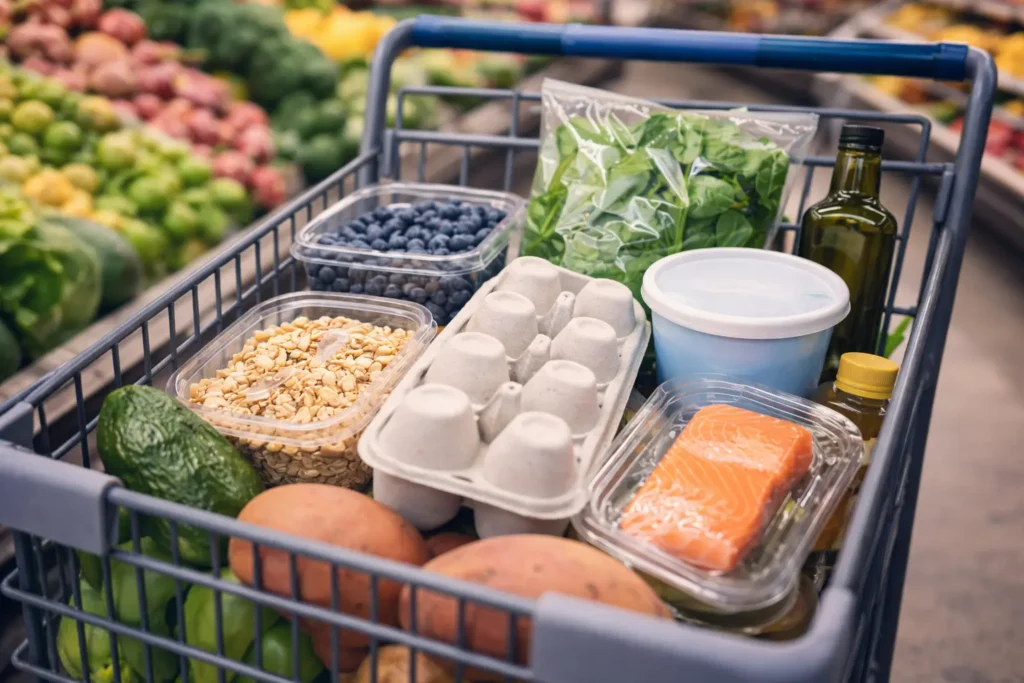
[Image Block 1: Grocery store aisle with fresh produce, eggs, and oats in a shopping cart]
Nuts and Seeds You’ll Find in Nearly Every Grocery Store
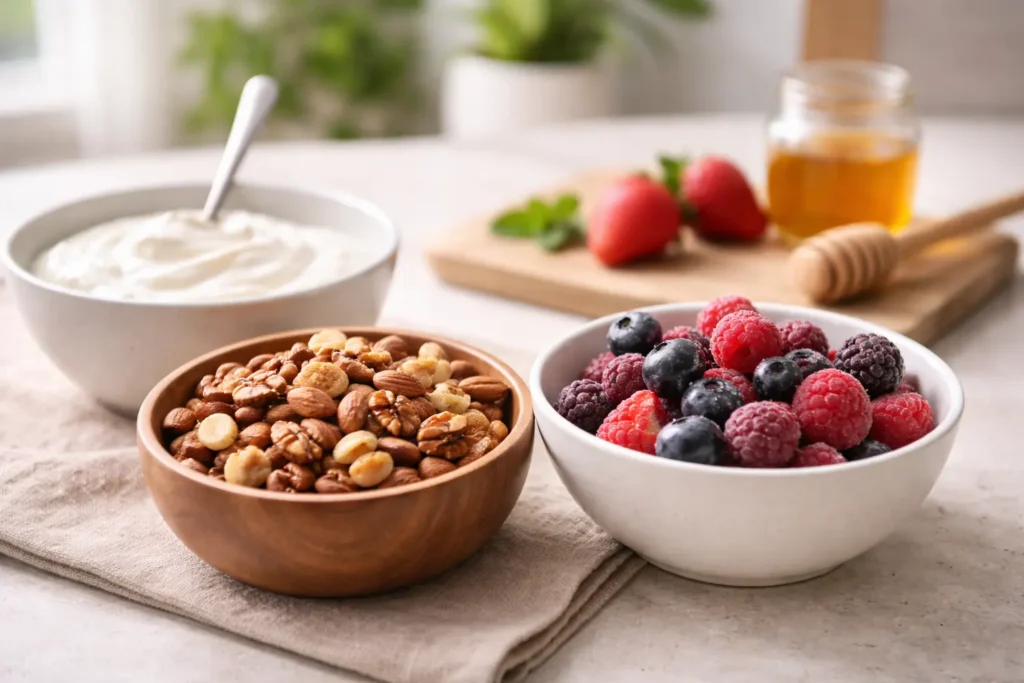
Nuts and seeds may be small, but they carry a surprising amount of nutritional value. Items like almonds, walnuts, peanuts, sunflower seeds, and chia seeds are widely available in US grocery stores and offer a mix of healthy fats, protein, and minerals.
What makes nuts and seeds especially helpful is how they support satiety. A small portion can go a long way in keeping hunger in check. Their healthy fat content also supports heart health and helps the body absorb fat-soluble vitamins from other foods.
They fit easily into daily routines:
- Sprinkled on salads or oatmeal
- Added to yogurt or smoothies
- Eaten as a simple snack
Because they’re shelf-stable and portable, they’re easy to keep on hand, which makes consistency more likely.
Frozen Fruits and Vegetables Still Count as Superfoods
Fresh isn’t the only way to eat well. Frozen fruits and vegetables are often picked and frozen at peak ripeness, which helps preserve nutrients. In many cases, they’re just as nutritious as fresh options—and sometimes more convenient.
Frozen berries, spinach, broccoli, and mixed vegetables are widely available and easy to use. They reduce food waste, last longer, and require minimal prep. For busy schedules, frozen produce often makes the difference between eating well and skipping vegetables entirely.
They’re especially useful for:
- Quick smoothies
- Easy side dishes
- Adding vegetables to meals without extra effort
Convenience supports consistency, and consistency supports health.
Canned Foods That Deserve More Credit
Canned foods don’t always get the respect they deserve, but many are nutritional workhorses. Canned beans, lentils, tomatoes, and fish are affordable, shelf-stable, and easy to use.
When choosing canned options, paying attention to sodium levels can help. Rinsing canned beans and vegetables reduces excess salt while keeping the nutrients intact.
Canned foods shine when time is limited. They allow you to build balanced meals quickly without sacrificing nutritional quality.
Simple Ways to Combine Everyday Superfoods
The easiest way to benefit from everyday superfoods is to combine them naturally rather than forcing new habits. Most meals already have a base—you’re just adding nutrient density.
Simple combinations that work:
- Oats topped with Greek yogurt and fruit
- Eggs cooked with leafy greens
- Beans added to soups or salads
These pairings don’t feel like “health food.” They feel like food—just more nourishing.
Why Variety Beats Obsession
No single food does everything. Everyday superfoods work best when rotated and combined. Eating a wide range of familiar foods supports different nutrients, gut diversity, and overall balance.
Focusing too heavily on one “perfect” food often leads to burnout. A flexible approach keeps eating enjoyable and sustainable.
Making Healthy Choices Feel Normal
The best nutrition plan is the one that fits into your life. Everyday superfoods succeed because they don’t require dramatic changes. They simply upgrade meals you already enjoy.
When healthy food feels normal rather than special, it becomes a habit rather than a chore.
Frequently Asked Questions About Everyday Superfoods
Are everyday superfoods as effective as trendy ones?
Yes. Consistency matters more than novelty, and everyday foods are easier to eat regularly.
Do frozen foods lose nutrients?
Most frozen fruits and vegetables retain nutrients very well and are comparable to fresh.
Are canned foods unhealthy?
Not inherently. Many canned foods are nutritious, especially when sodium is managed.
Do I need to eat all these foods daily?
No. Variety over time is more important than daily perfection.
Are superfoods expensive?
Many everyday superfoods are among the most affordable options in the store.
Can kids benefit from these foods too?
Yes. These foods support nutrition for all ages.
Final Thoughts
Superfoods don’t need to be rare or expensive to be effective. The foods that quietly support health are often the ones already in your kitchen or waiting on your local grocery shelf. When nutrition feels simple, consistent, and realistic, it becomes part of life rather than something you constantly think about.
Disclaimer: This article is for general informational purposes only and does not replace professional medical advice. Consult a qualified healthcare provider for personalized nutrition guidance.