

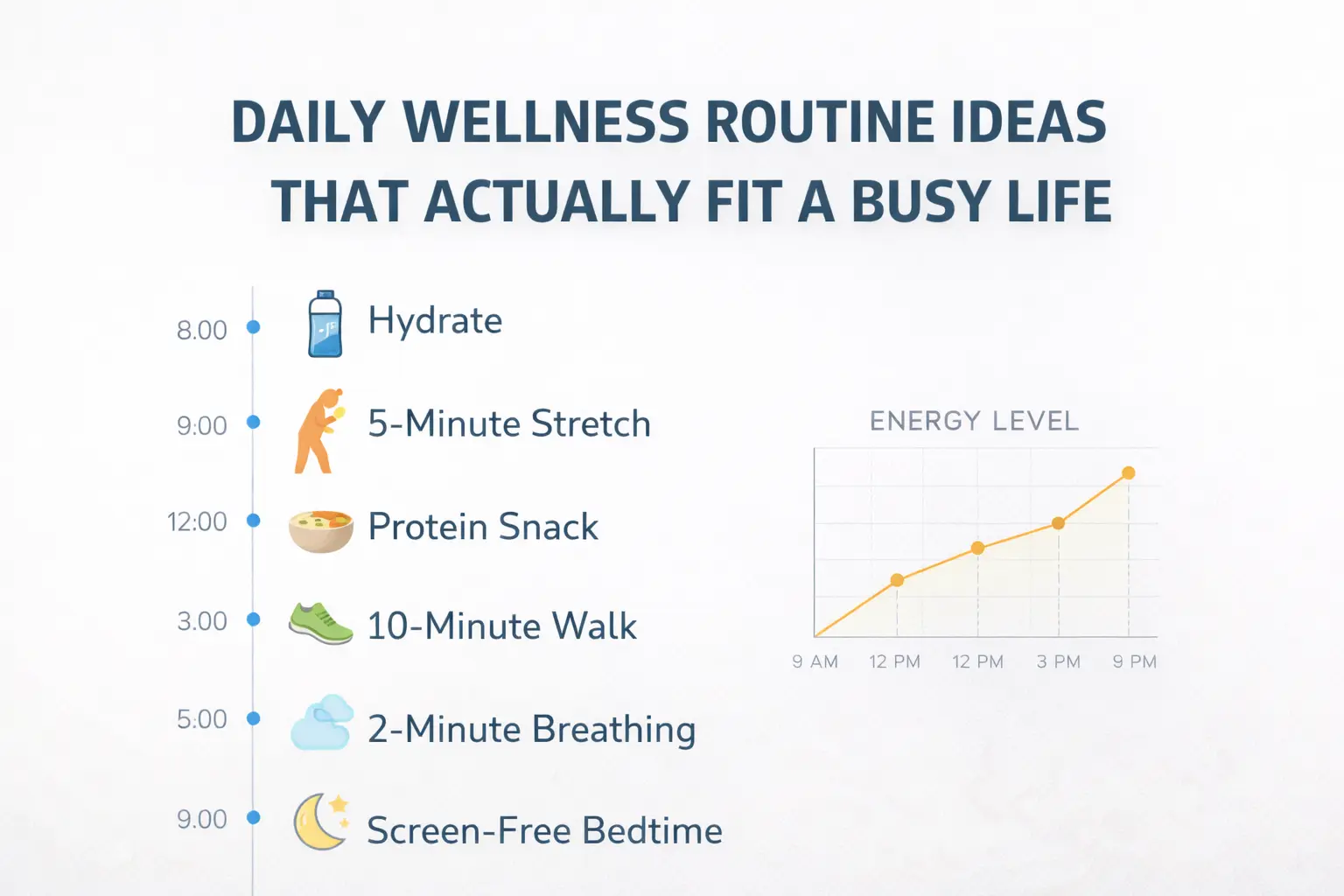
If you’ve ever tried to start a “Daily Wellness Routine Ideas ” and lasted about three days before life got in the way, you’re not alone.
Most adults in the U.S. are:
- Juggling work, family, and responsibilities
- Spending long hours sitting or on screens
- Grabbing quick meals between tasks
- Feeling tired, stressed, or behind on sleep
You might see perfect morning routine videos online and think,
“That looks great… but I don’t have an hour to journal, meditate, and make a gourmet smoothie.”
The truth is:
You don’t need a complicated routine to support your health. You need small, repeatable habits that actually fit into your real life.
In this article, you’ll learn:
- What a realistic daily wellness routine looks like (no perfection required)
- Simple morning, workday, and evening habits you can plug into your schedule
- How to build wellness into your day even if you have kids, a commute, or shift work
- How to keep going when you’re tired, stressed, or short on time
- When it makes sense to talk with a doctor or mental health professional
Important: This article is for general information only and is not medical advice. Everyone’s situation is different. Always talk with your doctor or another qualified healthcare professional about your specific health questions, especially if you have ongoing symptoms, chronic conditions, or concerns about new routines.
What “Wellness Routine” Really Means (It’s Not a Perfect Schedule)
Let’s clear something up first:
When you hear “daily wellness routine,” you might picture:
- An hour-long workout
- A 10-step skincare routine
- Perfect healthy meals all day
- Meditation, journaling, reading, stretching…
That might work for a few people. But for most adults in their 30s–60s, with busy schedules and responsibilities, it’s not realistic every single day.
A more helpful way to think about it:
A daily wellness routine is a set of small habits that support your body and mind, most days, in a way that fits your life.
It doesn’t have to be:
- All-or-nothing
- The same every day
- Completely rigid
Instead, think about:
- Tiny “non-negotiables” (like drinking water in the morning)
- Flexible options (a 5-minute stretch on some days, a 20-minute walk on others)
- Simple swaps (like standing up every hour instead of sitting for 4–5 hours straight)
Your routine is allowed to be:
- Messy
- Imperfect
- Adjustable when life changes
What matters is that it consistently moves you toward feeling a little better, not perfect.
The Core Pillars of a Realistic Daily Wellness Routine
Instead of chasing a long checklist, think in terms of pillars. Most daily wellness routines that support health touch these areas:
- Movement – Getting your body out of “sitting all day” mode
- Nutrition & Hydration – Eating and drinking in ways that support steady energy
- Sleep & Rest – Protecting your sleep window and practicing wind-down habits
- Stress & Mental Health – Simple tools to calm your mind and manage tension
- Connection & Joy – Making space for people and activities that make life feel worth living
You don’t need to do something huge in every pillar daily. Even a 5–10 minute action in each area can make a difference over time.
How to Build a Daily Wellness Routine That Fits Your Life
Before we talk specific ideas, it helps to think about your reality:
- Do you commute or work from home?
- Do you have young kids or caregiving responsibilities?
- Are mornings chaotic, or evenings more open?
- Do you sit most of the day for work?
Your answers shape where wellness habits naturally fit.
A Simple 3-Part Framework
Think of your day in three parts:
- Morning: How you “start up” your body and mind
- Workday / Daytime: Habits that interrupt long sitting and stress
- Evening / Night: How you wind down and prepare for restful sleep
For each part, we’ll go through quick options (5 minutes) and longer options (15–30 minutes) so you can adjust based on your schedule.
Morning Wellness Routine Ideas for Busy Adults
Morning doesn’t have to be magical to be meaningful. If your mornings are already tight, your goal is one or two small habits, not a full transformation.
Option 1: 5-Minute “Minimum” Morning Routine
If your mornings are hectic, consider this your baseline:
- Drink a glass of water
- Keep it by your bed or on the kitchen counter.
- This helps rehydrate after sleep and signals “the day has started.”
- Open the blinds or step outside for light
- Sunlight (or just outdoor light) helps your body know it’s daytime.
- Even 1–2 minutes on a balcony, porch, or by a window can help.
- Do a 60–90 second stretch
- Reach your arms overhead, roll your shoulders, gently stretch your neck.
- This helps your body shake off stiffness from sleep.
- Take 3–5 slow breaths before checking your phone
- Inhale through your nose, exhale slowly through your mouth.
- This small pause can reduce that “instant stress” feeling when your day starts.
That’s it. Even if everything else goes off track, you’ve taken a few minutes to support your body and mind.
Option 2: 15–20 Minute Morning Wellness Routine
If you can spare about 15–20 minutes, you can add a couple of extra layers:
- 2–3 minutes of light movement
- March in place, stretch, do a short YouTube follow-along, or walk around your home.
- The goal isn’t intensity; it’s just moving joints and muscles.
- Simple, balanced breakfast
Try including:- A protein (egg, Greek yogurt, nut butter, cottage cheese, tofu)
- A fiber source (fruit, oats, whole grain toast)
- Whole grain toast + peanut butter + sliced banana
- Greek yogurt + berries + a sprinkle of oats or nuts
- One mental health check-in habit
Options:- Write down three things you’re grateful for
- Set a simple intention: “Today I’ll focus on drinking water and taking stretch breaks.”
- Do 2–3 minutes of guided breathing or a short meditation audio
Option 3: 30-Minute “Ideal” Morning (For Days You Can)
You won’t do this every day, and that’s okay. On days you can, you might:
- Spend 10–15 minutes walking outside or on a treadmill
- Do gentle yoga or stretching
- Prepare a more relaxed breakfast (like oatmeal with toppings or a veggie omelet)
- Spend 5–10 minutes journaling or planning your top 3 priorities for the day
Think of this as your “bonus” morning routine — nice to have when there’s time, but not required to be “healthy.”
Workday Wellness: Habits for Desk Jobs and Busy Days
For many people, the workday is when wellness habits quietly disappear—especially if you sit at a desk, drive most of the day, or work on a computer.
A realistic wellness routine during work is about:
- Breaking up long sitting
- Supporting your posture, eyes, and joints
- Managing stress in small doses
- Making reasonably healthy choices with snacks and drinks
Micro-Habit 1: Break Up Long Sitting Time
If you sit most of the day, one of the most powerful habits is simply:
Stand up or move for 1–2 minutes every 30–60 minutes.
You can:
- Stand while taking phone calls
- Walk to the restroom on another floor
- Do a quick lap around your living room if you work from home
- Stretch your arms, back, and legs next to your desk
Set a gentle timer on your phone or computer, or tie movement to natural breaks:
- Every time you finish an email chunk
- After each meeting
- When you refill your water
Over time, this can support:
- Less stiffness and back discomfort
- Better circulation
- More alertness and focus
Micro-Habit 2: The 20-20-20 Rule for Your Eyes
If you’re on screens most of the day:
- Every 20 minutes, look at something about 20 feet away for about 20 seconds.
This helps give your eyes a break from constant close-up focus and may reduce strain and headaches for some people.
You can also:
- Blink intentionally (screens can make you blink less)
- Adjust screen brightness and font size
- Position your screen so you’re not craning your neck
Micro-Habit 3: Desk-Friendly Stretching
You don’t have to roll out a yoga mat in the office. Simple desk stretches can help:
- Gently roll your shoulders backward and forward
- Slowly tilt your head side to side (ear toward shoulder)
- Interlace fingers, stretch arms overhead and gently lean side to side
- Sit tall and lightly pull one knee toward your chest to stretch your lower back
Do these a few times per day, especially after long typing or sitting blocks.
Workday Nutrition & Hydration Habits
Instead of aiming for perfect meals, focus on small upgrades:
- Keep a water bottle at your desk and set mini goals (“finish this by lunch”).
- Pack protein + fiber snacks like:
- Nuts or trail mix (in reasonable portions)
- Fruit + cheese stick
- Carrot sticks + hummus
- Whole grain crackers + peanut butter
- When eating out:
- Add vegetables when possible
- Choose grilled instead of fried sometimes
- Order a smaller drink or choose water for at least one meal
You don’t have to give up coffee, but if you’re drinking multiple sugary or high-calorie drinks daily, cutting back a bit can quietly support your wellness goals.
Workday Stress “Release Valves”
During stressful days, it’s common to hold tension in your shoulders, jaw, and stomach. Quick “release valves” can help:
Try these simple tools:
- Box breathing (1–2 minutes):
- Inhale for 4 counts
- Hold for 4
- Exhale for 4
- Hold for 4
- Repeat a few times
- Jaw and shoulder scan:
- Drop your shoulders away from your ears
- Gently unclench your jaw
- Take one slow breath in and out
- Mini reset walk:
- Walk for 2–5 minutes (hallway, parking lot, around your home)
- Focus on how your feet feel on the ground instead of your to-do list
These small practices won’t erase stress, but they can help your nervous system settle a bit, which supports long-term health.
Evening Wellness Routine Ideas That Support Better Sleep
Evenings are powerful because what you do before bed can influence:
- How quickly you fall asleep
- How deeply you sleep
- How refreshed you feel the next day
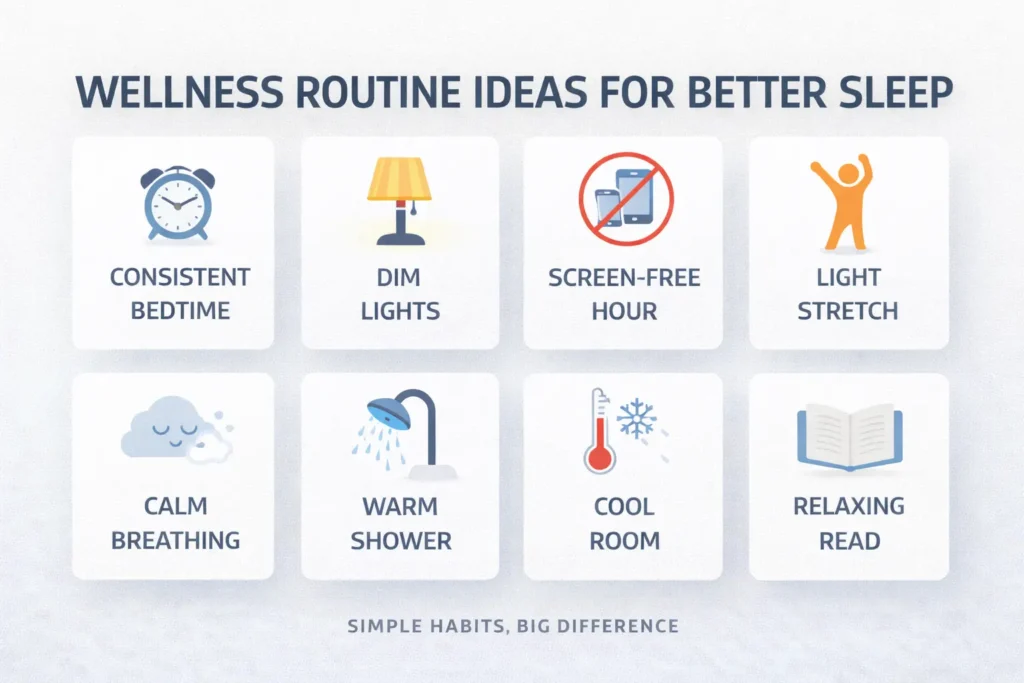
You don’t need a Pinterest-perfect night routine. Aim for a few consistent cues that tell your body, “We’re getting ready to rest.”
Option 1: 10-Minute Wind-Down
If evenings are busy, try this short routine:
- Pick a “screen slow-down” time
- Even 15–30 minutes before bed can help.
- Dim lights or switch to “night mode” on devices if you still need them.
- Do a gentle body check-in
- Lying or sitting, scan from head to toe.
- Notice where you feel tension (jaw, shoulders, back, hips).
- Take a slow breath into those areas and release on the exhale.
- Write down tomorrow’s top 3 tasks
- This can help your mind “let go” of planning while you sleep.
Option 2: 20–30 Minute Evening Routine
If you can, add:
- Light stretching or yoga (5–10 minutes)
- Focus on hips, lower back, and shoulders
- This can feel especially good if you sit much of the day
- Calming activities
- Reading a book (not on a bright screen, if possible)
- Listening to soft music or a calming podcast
- Taking a warm shower or bath
- Consistent sleep window
- Try to go to bed and wake up around the same time most days, even on weekends when possible.
Evening Eating & Drinking Habits
You don’t have to stop eating after a specific time, but some people feel better when they:
- Avoid very large, heavy meals right before bed
- Limit caffeine later in the day (coffee, energy drinks, certain sodas, and sometimes tea)
- Watch out for too much alcohol, which may make you sleepy at first but disrupts sleep quality later
If you feel very hungry at night, a small snack that combines protein and carbohydrates (like yogurt and fruit or peanut butter on toast) can be more satisfying than sugary snacks alone.
Tailoring Your Routine for Different Life Situations
Everyone’s routine will look a little different. Here are some ideas for common situations.
If You Work Long Hours at a Desk
- Commit to micro-movement breaks every 30–60 minutes
- Protect a 10–15 minute walk at some point in your day (before work, lunch, or after dinner)
- Keep healthy-ish snacks and water at your desk so you’re not relying only on vending machines
- Use your commute (if you have one) to listen to uplifting podcasts, audiobooks, or music that helps you shift out of work mode
If You’re a Busy Parent or Caregiver
- Pair your wellness habits with your kids’ routines:
- Stretch or do a few yoga poses while they brush their teeth
- Take a short walk while they ride a bike or scooter
- Do “family movement time” after dinner – a walk, dancing in the living room, or a quick game
- Choose one simple personal habit you can commit to daily:
- Drinking a full glass of water each morning
- Taking 5 calm breaths before bed
- Eating one fruit and one vegetable every day
Remember: caring for yourself supports your ability to care for others.
If You Work Nights or Shifts
Shift work is tough on routines, but you can still use the same principles:
- Decide what “morning,” “day,” and “evening” mean in your schedule (even if your morning is at 4 pm).
- Use light exposure to signal your body when it’s “day” vs “night.”
- Protect a wind-down window before sleep, even if your bedtime is unconventional.
- Try to keep meal timing somewhat consistent, with a pattern of:
- Main meal
- Light snack
- Water throughout
If you feel exhausted or your sleep is very disrupted, it can be helpful to talk with your doctor about safer ways to manage fatigue.
If You’re Dealing With Pain, Fatigue, or Health Conditions
Wellness routines should never feel like punishment. If you’re dealing with:
- Chronic pain
- Fatigue
- Mobility challenges
- Health conditions (like heart issues, lung disease, diabetes, etc.)
Then your routine may need to be extra gentle and personalized.
Options could include:
- Chair-based movement or stretching
- Very short walking intervals (like 2–3 minutes at a time)
- Mindful breathing or relaxation exercises while seated or lying down
- Breaking tasks into small chunks with rest breaks
Always talk with your doctor or physical therapist about what kind of activity level is safe for you.
This article is not meant to diagnose or treat any condition and cannot replace individual medical advice.
How to Make Wellness Habits Stick (Without Perfection)
Knowing what to do is one thing. Doing it consistently is another. Here are some tools to make habits more realistic.
1. Use “Habit Stacking”
Instead of trying to remember a new habit randomly, attach it to something you already do.
Examples:
- After I brush my teeth, I will stretch for 60 seconds.
- After I start my coffee machine, I will drink one glass of water.
- After I log into my computer, I will do 3 deep breaths before checking email.
The existing habit becomes your trigger for the new one.
2. Make Habits So Small They’re Hard to Skip
Many people make habits too big at first and burn out. Try starting with:
- 5 minutes of movement
- 1–2 minutes of breathing
- 1 extra serving of vegetables
- 1 glass of water at a specific time
You can always build up later. Starting small helps your brain believe, “Yes, I can actually do this.”
3. Design Your Environment to Support You
As much as possible, set up your surroundings so wellness habits are the easy choice:
- Keep a water bottle where you can see it.
- Place walking shoes near the door.
- Store healthier snacks at eye level and treat foods in less convenient spots.
- Put a yoga mat or stretching area in a spot you walk past frequently.
The fewer obstacles you have, the more likely you’ll follow through.
4. Plan for “Messy” Days
No one does their routine perfectly every day. Expect that:
- Some days you’ll only do your 5-minute minimum.
- Some days life will go sideways and you’ll do almost nothing — and that’s okay.
- What matters is getting back to your baseline, not beating yourself up.
When you miss a day (or a week), a helpful mindset is:
“I’m a person who’s learning a wellness routine, not a person who failed at one.”
Then choose one small action to restart: a walk, a glass of water, a stretch, or early bedtime.
5. Track Progress in a Simple, Encouraging Way
You don’t need complex apps (unless you enjoy them). A simple tracking method could be:
- A calendar where you put a check mark on days you do your “minimum” routine
- A notebook where you jot 3 wellness wins at the end of the day (even tiny ones)
This helps you see that you’re doing more than you think, which builds motivation.
When to Talk With a Doctor or Mental Health Professional
Daily wellness routines are powerful, but they don’t replace medical care. It’s important to reach out for help if you notice:
- Chest pain, pressure, or pain spreading to the arm/jaw
- Sudden trouble speaking, weakness on one side, or facial drooping
- Sudden shortness of breath or difficulty breathing
- Fainting, severe dizziness, or confusion
These can be emergency signs. Call emergency services right away if you think you might be having a heart attack, stroke, or other serious issue.
Also consider talking with a doctor or mental health professional if you:
- Feel tired all the time despite getting reasonable sleep
- Have ongoing pain that’s not improving
- Notice persistent sadness, anxiety, or loss of interest in things you usually enjoy
- Find it hard to function at work, at home, or in relationships
A wellness routine can support you, but it cannot solve everything. Getting proper medical and mental health care is an important form of self-care too.
This article is for education only and is not a substitute for professional diagnosis, treatment, or medical advice.
FAQs: Daily Wellness Routines for Busy Adults
1. How long should a daily wellness routine be?
There’s no perfect length. For many busy adults, a realistic goal is:
- 5–10 minutes of wellness in the morning
- Micro-habits throughout the workday (standing, stretching, breathing)
- 10–20 minutes of wind-down time in the evening
If you have time for more, great. If not, focus on doing something small consistently rather than a long routine once in a while.
2. What if I don’t have time to exercise every day?
Exercise doesn’t have to mean a full workout at the gym. You can:
- Take short walks (5–10 minutes) during the day
- Use stairs when possible
- Do bodyweight exercises (like squats, wall pushups, or marches in place) in short bursts
- Stretch before bed or after you wake up
Over the week, these small bits of movement can add up. If you’re starting a new exercise routine or have medical conditions, check with your doctor about what’s safe for you.
3. How do I create a routine if my schedule changes every day?
If your schedule is unpredictable:
- Build routines around events, not clock times.
- Example: “After my first cup of coffee, I stretch for 1 minute,” or “After my shift ends, I take a 10-minute walk if it’s safe.”
- Make a short “minimum routine” you can do any day, anywhere.
- Keep some wellness tools (water bottle, healthy snacks, headphones for calming audio) with you when you’re on the go.
Flexibility is your friend. Your wellness routine can be portable.
4. Can a daily wellness routine help with weight loss?
It can support weight management, especially if it includes:
- Regular movement
- More balanced, mindful eating
- Better sleep and stress management
However, weight loss is influenced by many factors (genetics, hormones, health conditions, medications, etc.). A wellness routine is more about taking care of your body in multiple ways. If weight loss is a goal, talk with your doctor about a safe plan and realistic expectations.
5. I try to start routines and always fall off. What should I do differently?
You’re not alone. Some ideas that may help:
- Start smaller than you think you need to (1–5 minutes).
- Focus on building one habit at a time, not 10 at once.
- Attach the new habit to something you already do (habit stacking).
- Track your progress in a kind, encouraging way instead of focusing on “failures.”
- If you struggle with motivation, consider asking a friend or family member to be an accountability partner.
Remember: wellness is a long-term journey, not a 7-day challenge. It’s okay to begin again as many times as you need.
Final Thoughts: Wellness that Respects Your Real Life
A daily wellness routine doesn’t have to look like anyone else’s — and it definitely doesn’t have to be perfect.
What matters is that, most days, you’re:
- Moving your body at least a little
- Eating and drinking in ways that support your energy
- Protecting some time for rest and sleep
- Checking in with your stress and emotions
- Making space for people and activities that bring joy and meaning
Start with one small habit in the morning, one in the workday, and one at night. Let your routine grow slowly, at a pace that feels manageable.
This article is for general information only and is not medical advice. For guidance tailored to your health, lifestyle, and medical history, talk with your doctor, a registered dietitian, or a mental health professional.