

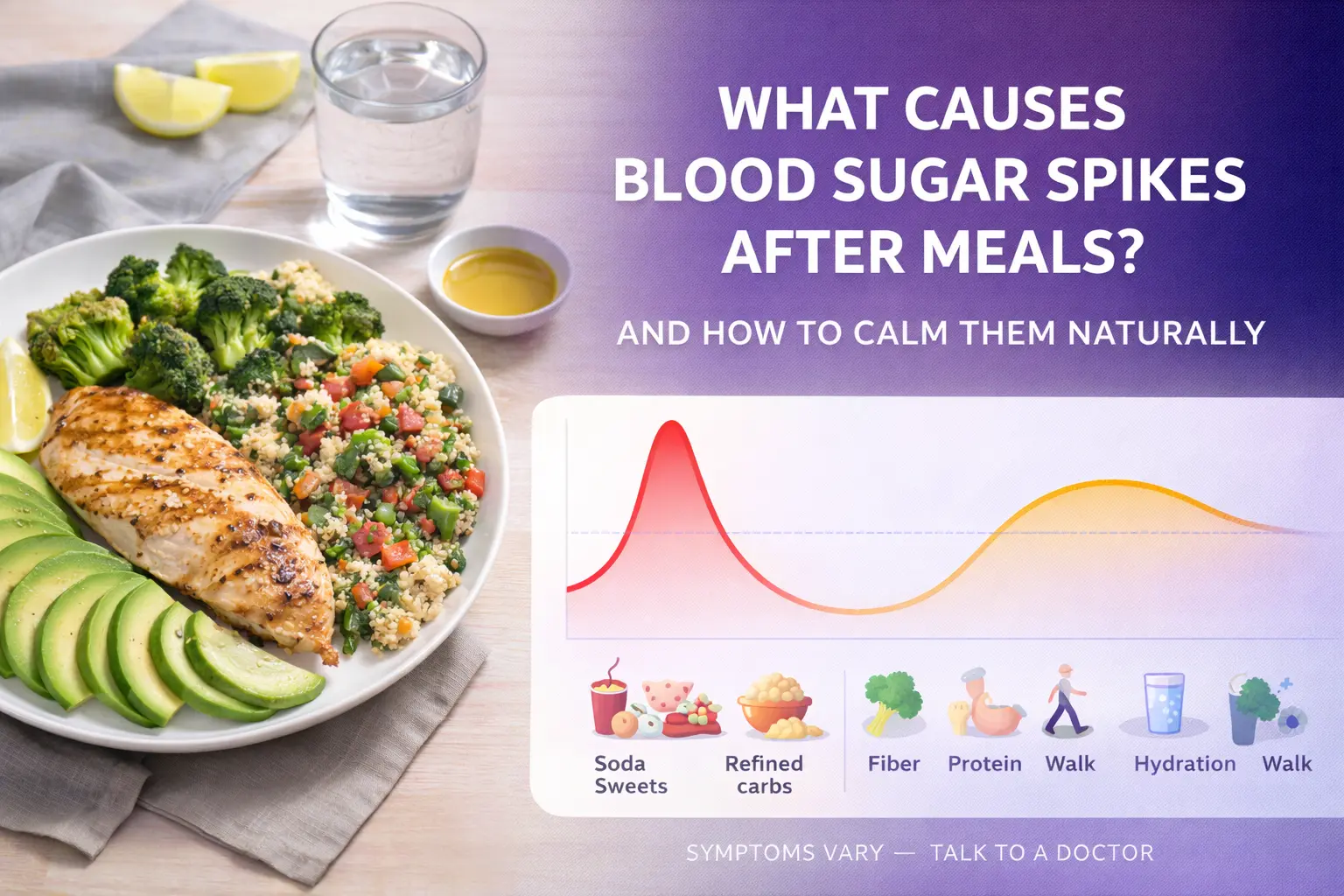
What Causes Blood Sugar Spikes After Meals is a question many people start asking once they notice energy crashes, intense cravings, brain fog, or sudden fatigue shortly after eating. For some, it’s a daily pattern: eat a meal, feel okay for a short while, then experience a sharp drop in energy or mood. For others, blood sugar spikes show up as shakiness, sleepiness, or even irritability after meals that were supposed to be “healthy.”
Blood sugar rises after eating—it’s normal. But when those rises are sharp, frequent, or followed by sudden crashes, it can signal that the body is struggling to manage glucose effectively. Over time, repeated spikes may contribute to insulin resistance, prediabetes, and difficulty maintaining steady energy levels throughout the day.
Understanding why blood sugar spikes happen after meals isn’t about perfection or strict rules. It’s about learning how everyday food choices, meal timing, and habits interact with your body. Once you understand the causes, calming those spikes often becomes more manageable than expected.
How Blood Sugar Normally Responds After Eating
Every time you eat, especially carbohydrates, your digestive system breaks food down into glucose. That glucose enters the bloodstream, causing blood sugar levels to rise. In response, the pancreas releases insulin, a hormone that helps move glucose into cells where it’s used for energy.
In a balanced system:
- Blood sugar rises gradually
- Insulin responds efficiently
- Glucose enters cells smoothly
- Energy remains steady
Problems arise when this system becomes less responsive. Insulin resistance makes it harder for cells to accept glucose, causing sugar to linger in the bloodstream longer than it should. The result is a sharper spike—and often a harder crash afterward.
Refined Carbohydrates and Sugary Foods
One of the most common causes of blood sugar spikes after eating is a high intake of refined carbohydrates. These foods are digested quickly, sending glucose into the bloodstream at a rapid pace.
Examples include white bread, pastries, sweetened cereals, sugary drinks, desserts, and many processed snack foods. Because they lack fiber and protein, there’s nothing to slow digestion. Blood sugar rises fast, insulin surges, and energy often drops shortly after.
This rapid rise-and-fall cycle can leave you feeling:
- Sleepy or sluggish
- Hungry again soon after eating
- Craving more sugar or carbs
Over time, frequent reliance on refined carbs can make blood sugar harder to control, especially when meals are built around them.
Eating Large Portions in One Sitting
Even healthy foods can cause blood sugar spikes when portions are large. Eating a heavy meal—especially one high in carbohydrates—delivers a large glucose load all at once. The body may struggle to keep up, leading to higher post-meal blood sugar levels.
Large portions also slow digestion unevenly. Blood sugar may rise sharply at first, then stay elevated longer than expected. This prolonged elevation can leave you feeling uncomfortable, bloated, or mentally foggy.
Portion size matters just as much as food quality. Balanced meals spread glucose absorption more evenly, reducing the likelihood of dramatic spikes.
Lack of Protein, Fiber, or Fat in Meals
Meals made mostly of carbohydrates tend to raise blood sugar faster than meals that include protein, fiber, and healthy fats. These nutrients slow digestion and help glucose enter the bloodstream more gradually.
When meals lack balance, blood sugar spikes become more likely. A bowl of plain pasta, a bagel on its own, or fruit juice without fiber can all cause rapid rises.
Balanced meals tend to:
- Keep blood sugar steadier
- Support longer-lasting energy
- Reduce cravings between meals
Adding even small amounts of protein or fiber can significantly change how your body responds to food.
Eating Too Quickly
Speed matters more than many people realize. Eating quickly doesn’t give the body time to release hormones that regulate digestion and insulin response. Large bites and rushed meals can overwhelm the system, leading to sharper blood sugar spikes.
When you eat fast:
- Glucose enters the bloodstream quickly
- Insulin response may lag
- Fullness cues are delayed
This often leads to overeating and higher post-meal blood sugar levels. Slowing down allows the body to process food more efficiently and can naturally calm spikes.
Poor Sleep and Blood Sugar Spikes
Sleep plays a major role in glucose regulation. Poor or inconsistent sleep can make cells less sensitive to insulin the following day. Even one night of inadequate sleep can increase the likelihood of blood sugar spikes after meals.
When sleep is short or disrupted:
- Insulin resistance increases
- Appetite hormones become imbalanced
- Cravings for high-carb foods rise
This creates a feedback loop where poor sleep leads to higher blood sugar, which can then interfere with sleep quality the next night.
Stress and Its Impact on Post-Meal Blood Sugar
Stress doesn’t just affect your mind—it directly affects blood sugar. When the body is under stress, it releases hormones like cortisol that increase glucose availability in the bloodstream.
Eating during stressful moments can amplify post-meal spikes. Even healthy meals may lead to higher-than-expected blood sugar levels when stress is high.
Chronic stress can:
- Increase insulin resistance
- Promote higher fasting blood sugar
- Make blood sugar harder to stabilize overall
Managing stress isn’t just about emotional health—it’s part of blood sugar management.
Common Everyday Habits That Worsen Blood Sugar Spikes
Some habits quietly increase the likelihood of post-meal spikes without being obvious:
- Skipping meals and then overeating
- Drinking sugary beverages with meals
- Sitting immediately after eating
- Eating late at night
These patterns can interfere with how efficiently the body handles glucose and may worsen energy crashes over time.
Why Blood Sugar Spikes Matter Even Without Diabetes
You don’t need a diabetes diagnosis to experience harmful blood sugar spikes. Frequent spikes can affect mood, focus, appetite control, and long-term metabolic health. Over time, repeated spikes may contribute to insulin resistance and increase the risk of developing type 2 diabetes.
Stabilizing blood sugar isn’t about strict control—it’s about consistency and awareness.
Simple Ways to Calm Blood Sugar After Meals
Calming blood sugar doesn’t require extreme diets. Small, realistic changes often make the biggest difference:
- Pair carbohydrates with protein or fiber
- Eat meals at consistent times
- Slow down and chew thoroughly
- Take a short walk after eating
These habits help glucose move into cells more efficiently and prevent dramatic rises.

Foods That Help Support Steadier Blood Sugar Levels
What you eat after understanding what causes blood sugar spikes after meals can make a noticeable difference in how your body responds. Certain foods digest more slowly, helping glucose enter the bloodstream at a steadier pace rather than all at once.
Fiber-rich foods are especially helpful because fiber slows carbohydrate absorption. Vegetables, legumes, whole grains, nuts, and seeds all contribute to a gentler blood sugar response. Protein also plays a key role by reducing how quickly glucose is released during digestion and helping you feel full longer.
Healthy fats don’t spike blood sugar on their own and can further slow digestion when paired with carbohydrates. This combination can reduce sharp rises and improve overall energy stability.
Meals that support steadier blood sugar often include:
- A source of protein (eggs, beans, fish, poultry, tofu)
- Fiber-rich carbohydrates (vegetables, whole grains, berries)
- Healthy fats (olive oil, nuts, seeds, avocado)
Rather than focusing on restriction, the goal is balance. Adding supportive foods is often more effective than simply cutting things out.
Why Meal Timing Plays a Bigger Role Than You Think
When you eat can influence blood sugar just as much as what you eat. Irregular eating patterns—such as skipping meals or eating very late at night—can make glucose control more difficult.
Skipping meals often leads to larger portions later in the day. When the body is overly hungry, insulin response may be less efficient, increasing the likelihood of a spike. Late-night meals can also interfere with blood sugar regulation because insulin sensitivity naturally decreases in the evening.
Eating at consistent times helps train the body to anticipate glucose intake and respond more smoothly. This doesn’t mean rigid schedules, but a general rhythm can support more stable post-meal blood sugar levels.
The Impact of Movement After Eating
One of the simplest ways to calm blood sugar spikes after meals is gentle movement. You don’t need intense exercise. Even light activity helps muscles use glucose more effectively, reducing how much sugar stays in the bloodstream.
A short walk after eating can:
- Lower post-meal blood sugar levels
- Improve insulin sensitivity
- Reduce energy crashes
This is especially helpful after meals higher in carbohydrates. Movement acts like a natural buffer, helping glucose move into muscles where it’s needed for energy.
Hydration and Its Role in Blood Sugar Control
Staying well-hydrated supports healthy blood sugar regulation. When the body is dehydrated, blood sugar can become more concentrated, making spikes more noticeable.
Drinking water throughout the day—especially around meals—can help the kidneys flush excess glucose more efficiently. Sugary beverages, on the other hand, contribute directly to blood sugar spikes and often worsen post-meal crashes.
Choosing water, unsweetened tea, or other low-sugar options supports steadier glucose levels without adding unnecessary spikes.
How Stress Management Helps Calm Blood Sugar
Stress hormones like cortisol raise blood sugar by signaling the body to release stored glucose. When stress is chronic, this process happens frequently, making post-meal spikes harder to control.
Simple stress-reducing habits can support better blood sugar balance:
- Taking a few deep breaths before meals
- Eating without distractions
- Creating calm routines around food
Even small changes can improve how the body responds to glucose, especially when practiced consistently.
Why Blood Sugar Spikes Can Lead to Cravings and Weight Gain
Sharp rises in blood sugar are often followed by sharp drops. These crashes can trigger hunger, cravings for sweets, and overeating later in the day. Over time, this cycle makes weight management more challenging.
Repeated spikes also promote insulin resistance, which encourages the body to store more energy as fat—particularly around the abdomen. Calming blood sugar swings helps break this cycle and supports more stable appetite signals.
When Blood Sugar Spikes May Signal a Bigger Issue
Occasional spikes happen to everyone. But frequent, intense spikes—especially when paired with fatigue, thirst, or frequent urination—may indicate insulin resistance or prediabetes.
If post-meal symptoms are persistent or worsening, discussing them with a healthcare provider can help determine whether blood sugar testing is appropriate. Early awareness allows for proactive steps rather than reactive treatment.
Frequently Asked Questions About Blood Sugar Spikes After Meals
Are blood sugar spikes after eating always unhealthy?
No. Some rise is normal. Problems occur when spikes are sharp, frequent, or followed by crashes.
Can healthy foods still cause spikes?
Yes. Large portions or lack of protein and fiber can cause spikes even with nutritious foods.
Does walking after meals really help?
Yes. Light movement helps muscles absorb glucose, reducing post-meal blood sugar levels.
Do blood sugar spikes affect people without diabetes?
Yes. Many people experience spikes due to insulin resistance long before diabetes develops.
Is eating carbs always the problem?
No. Carbohydrates are not the enemy. Balance, portion size, and food pairing matter most.
Can stress alone raise blood sugar after meals?
Yes. Stress hormones can increase glucose levels and worsen post-meal responses.
How long do blood sugar spikes usually last?
They typically peak within 1–2 hours after eating, but this can vary depending on the meal and individual metabolism.
Final Thoughts
Understanding what causes blood sugar spikes after meals puts control back into everyday choices. These spikes aren’t just about food—they’re shaped by sleep, stress, movement, portion size, and timing. Small adjustments, practiced consistently, can calm blood sugar responses and support steadier energy throughout the day.
Managing blood sugar isn’t about perfection. It’s about awareness, balance, and creating habits that work with your body rather than against it.
Disclaimer: This article is for informational purposes only and does not replace professional medical advice. Always consult a qualified healthcare provider regarding blood sugar concerns or symptoms.