

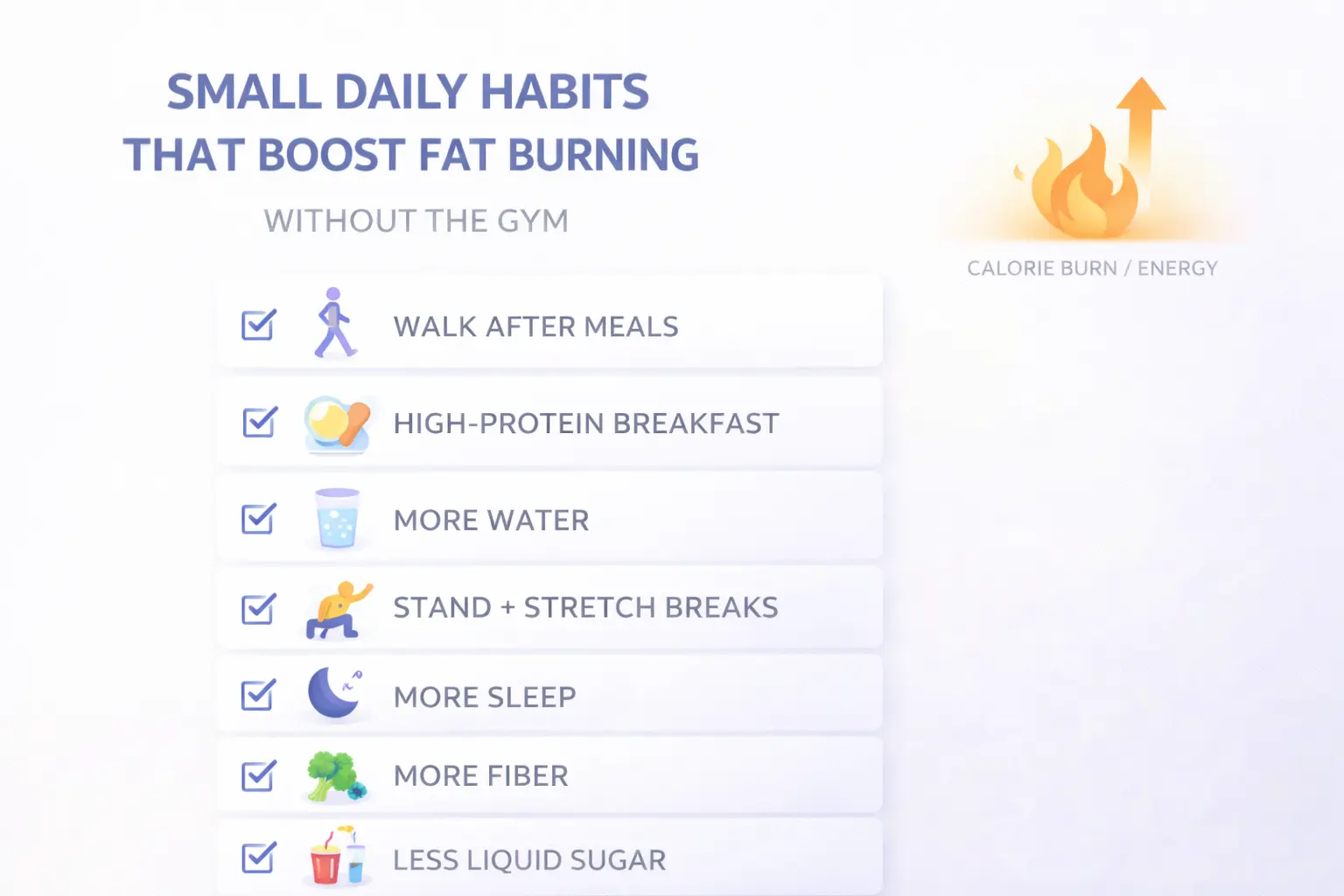
Small Daily Habits That Boost Fat Burning Without the Gym often matter far more than people realize. Not everyone enjoys the gym. Some people don’t have the time. Others have tried structured workouts repeatedly and still feel stuck. The truth is, fat burning isn’t limited to treadmills, dumbbells, or sweat-soaked routines. A large portion of how the body burns calories happens quietly, throughout the day, shaped by small decisions most people barely notice.
Your body is always using energy. Standing, walking, digesting food, thinking, even regulating temperature all require calories. When daily habits support movement, stable blood sugar, and hormonal balance, fat burning becomes more consistent—even without formal exercise sessions. This is why some people seem to stay lean without ever “working out,” while others struggle despite spending hours at the gym.
The goal isn’t to replace exercise entirely. It’s to understand that fat loss isn’t a single event—it’s a daily environment. When that environment supports calorie burn naturally, results feel less forced and more sustainable.
Why Everyday Movement Matters More Than Workouts
One of the biggest misconceptions about fat loss is that it mainly comes from workouts. In reality, a large portion of daily calorie burn comes from non-exercise movement—things like walking, standing, cleaning, fidgeting, and changing positions throughout the day.
This type of movement happens automatically when your routine allows it. When it doesn’t, the body becomes efficient in the wrong direction—burning fewer calories to conserve energy.
People who move more during the day often don’t notice they’re doing it. They stand while talking on the phone. They walk while thinking. They pace when stressed. These small actions add up over hours, not minutes.
Even without the gym, daily movement can:
- Increase total calorie burn
- Improve insulin sensitivity
- Reduce fat storage signals
The key isn’t intensity. It’s frequency.
Walking More Without “Going for Walks”
Walking is one of the most underrated fat-burning tools available. It’s gentle, low-stress, and doesn’t trigger the hunger spikes that intense workouts sometimes do. The mistake many people make is treating walking like exercise instead of a default behavior.
Instead of scheduling long walks, focus on weaving walking into your day. Short walks done repeatedly are often more effective than one long session.
Examples that feel realistic:
- Walking while on phone calls
- Parking farther away without overthinking it
- Standing up and walking for two minutes every hour
These moments don’t feel like workouts, which is why they’re sustainable. Over time, they significantly increase daily calorie burn.
Eating Protein Earlier in the Day
One habit that quietly supports fat burning is eating enough protein—especially earlier in the day. Protein has a higher thermic effect than carbohydrates or fats, meaning your body burns more calories digesting it. It also helps regulate appetite and stabilize blood sugar.
When protein is low early on, hunger often spikes later. That’s when cravings hit, portions increase, and fat storage becomes more likely.
Eating protein earlier can:
- Reduce mindless snacking
- Improve energy levels
- Support muscle maintenance (which increases calorie burn)
This doesn’t require special diets. It’s simply about not waiting until dinner to eat your first meaningful protein source.
Sleeping in a Way That Supports Fat Loss
Sleep is often ignored in conversations about fat burning, yet it directly affects hormones that regulate appetite and metabolism. Poor sleep increases hunger hormones and reduces insulin sensitivity, making fat storage more likely—even if calories don’t change.
What matters most isn’t perfection, but consistency. Going to bed and waking up at roughly the same time helps regulate metabolic rhythms. When sleep is irregular, the body stays in a stress-adapted state that favors fat storage.
People who improve sleep often notice:
- Reduced cravings
- Better energy during the day
- Easier weight management
This happens without adding any workouts at all.
Standing More Than Sitting (Without Forcing It)
Standing burns more calories than sitting, but the real benefit comes from transitions. Sitting for long stretches signals the body to conserve energy. Standing up regularly interrupts that signal.
You don’t need a standing desk to benefit. Simply changing positions frequently helps.
Small shifts that work:
- Standing during short tasks
- Stretching while waiting for things
- Avoiding long, uninterrupted sitting blocks
These changes don’t feel dramatic, but over weeks and months, they create a more metabolically active day.
Hydration and Fat Burning Signals
Being mildly dehydrated can slow metabolic processes. When water intake is low, the body becomes more conservative with energy use. Drinking enough water supports digestion, circulation, and efficient calorie burn.
Hydration also helps prevent mistaking thirst for hunger. Many people snack when their body is actually asking for fluids.
This habit supports fat burning indirectly by:
- Improving digestion efficiency
- Supporting movement energy
- Reducing unnecessary calorie intake
It’s simple, but surprisingly effective.
Daily Habits That Quietly Support Fat Burning
These habits don’t feel like weight-loss strategies, which is exactly why they work:
- Moving lightly but often
- Eating protein consistently
- Sleeping on a predictable schedule
- Standing and shifting positions regularly
None of these require motivation. They rely on environment and routine instead.
Why Stress Levels Matter More Than People Think
Chronic stress signals the body to conserve energy and store fat, especially around the midsection. Even without overeating, high stress can slow fat loss.
Small stress-reducing habits—like quiet mornings, screen breaks, or slower meals—can improve hormonal balance. This creates a metabolic environment where fat burning becomes easier, not harder.

Meal Timing That Supports Natural Fat Burning
One of the most overlooked fat-burning habits has nothing to do with what you eat and everything to do with when you eat. The body runs on internal rhythms. When meals constantly shift or get pushed late into the night, metabolism becomes less efficient—not because of calories alone, but because insulin sensitivity drops as the day goes on.
Eating most of your calories earlier—when the body is naturally better at processing food—can make fat burning feel less forced. This doesn’t mean skipping dinner or eating tiny portions at night. It simply means avoiding long fasts followed by large late meals that overwhelm the system.
People who adjust meal timing often notice:
- Fewer evening cravings
- Better morning energy
- Less bloating and heaviness
This shift works quietly in the background, without needing willpower.
Why Tiny Bursts of Activity Beat One Big Effort
Fat burning responds well to consistency, not intensity. Short bursts of movement sprinkled throughout the day keep muscles active and insulin working efficiently. Long periods of inactivity do the opposite, even if you exercise once.
These micro-movements don’t need planning:
- A few squats while waiting for coffee
- Light stretching between tasks
- Taking stairs when it feels natural
These actions send a steady signal to the body that energy is needed, encouraging calorie use rather than storage.
Evening Habits That Reduce Fat Storage Overnight
What happens in the evening shapes how the body burns or stores energy overnight. Late-night snacking, screen overload, and mental stimulation can all interfere with metabolic recovery.
Calmer evenings support better sleep and hormone balance. Simple routines—dimming lights, eating earlier when possible, slowing down before bed—help the body shift into repair mode rather than storage mode.
This isn’t about strict rules. It’s about creating a gentle landing for the day.
Stubborn Fat and Why Daily Habits Matter More Than Effort
Stubborn fat often isn’t about lack of effort. It’s usually a sign that the body doesn’t feel safe letting go of energy. Stress, poor sleep, blood sugar swings, and long sitting periods all reinforce fat storage signals.
When daily habits reduce stress and improve metabolic flexibility, stubborn fat often becomes less stubborn—without aggressive dieting.
This is why people sometimes lose fat after relaxing their approach rather than tightening it.
How Digestion Influences Calorie Burn
Efficient digestion uses energy. When digestion is sluggish—due to rushing meals, overeating, or chronic stress—the body becomes less efficient overall.
Eating slowly, chewing well, and sitting down for meals supports:
- Better nutrient absorption
- More stable blood sugar
- Increased thermic effect of food
These habits don’t feel like fat-loss strategies, yet they support them directly.
Fat Burning Without the Gym Is About Environment
The body responds to the environment it’s placed in daily. A routine that includes movement, rest, nourishment, and recovery naturally supports fat burning. A routine built around stress, sitting, and rushed eating does the opposite.
This explains why sustainable fat loss often happens when life feels more balanced—not more restrictive.
Frequently Asked Questions
Can fat burning really improve without workouts?
Yes. Daily movement and metabolic habits contribute significantly to calorie burn.
Is walking enough to burn fat?
For many people, consistent walking supports fat loss better than sporadic intense workouts.
Do small habits really make a difference?
Over time, small habits shape hormonal balance and energy use more than short-term effort.
Why does stress make fat loss harder?
Stress hormones signal the body to conserve energy and store fat.
Does sleeping more help burn fat?
Consistent, quality sleep supports hormones that regulate appetite and metabolism.
How long before results appear?
Energy and appetite often improve first; body composition changes follow gradually.
Final Thoughts
Small daily habits don’t feel impressive—and that’s why they work. They shape how the body uses energy hour by hour, not just during workouts. When movement becomes natural, meals feel balanced, sleep improves, and stress lowers, fat burning becomes a byproduct rather than a battle.
This approach isn’t flashy. It’s quiet, steady, and sustainable—and for many people, it’s what finally works.
Disclaimer: This article is for general informational purposes only and does not replace professional medical advice. Consult a qualified healthcare provider for personalized guidance.
